
Polskie Państwo Podziemne. Akcja „Burza”. Powstanie warszawskie.
WYMAGANIA WYNIKAJĄCE Z PODSTAWY PROGRAMOWEJ
XVII. Europa w XVI i XVII w.
Uczeń:
1) wyjaśnia znaczenie wojny trzydziestoletniej.
2) charakteryzuje konflikty polityczne w Europie, z uwzględnieniem ekspansji tureckiej i charakteru wojny trzydziestoletniej.

› Który pokój regulował sprawę wojen religijnych w Rzeszy?
› Jakie były jego postanowienia?
KARTY PRACY –> uzupełnij
Unia Protestancka i Liga Katolicka
Przyczyny wojny trzydziestoletniej
Przebieg (etapy)
Pokój westfalski
Skutki
Artykuł „Wojna trzydziestoletnia. Najbardziej krwawy konflikt w dziejach Europy przed XX wiekiem”. Zakres rozszerzony [grupa I]
Artykuł „Wojna trzydziestoletnia (1618–1648). Protestanci kontra katolicy”. Zakres rozszerzony [grupa II]
Artykuł „Wojna trzydziestoletnia – tło działań, przebieg, strony, straty”. Zakres rozszerzony [grupy III i IV]
Artykuł do dyskusji „Wojna trzydziestoletnia – największa katastrofa nowożytnej Europy”. Zakres rozszerzony
Artykuł do dyskusji „Wojna trzydziestoletnia. Milion ofiar wojny, która żywiła się sama”. Zakres rozszerzony
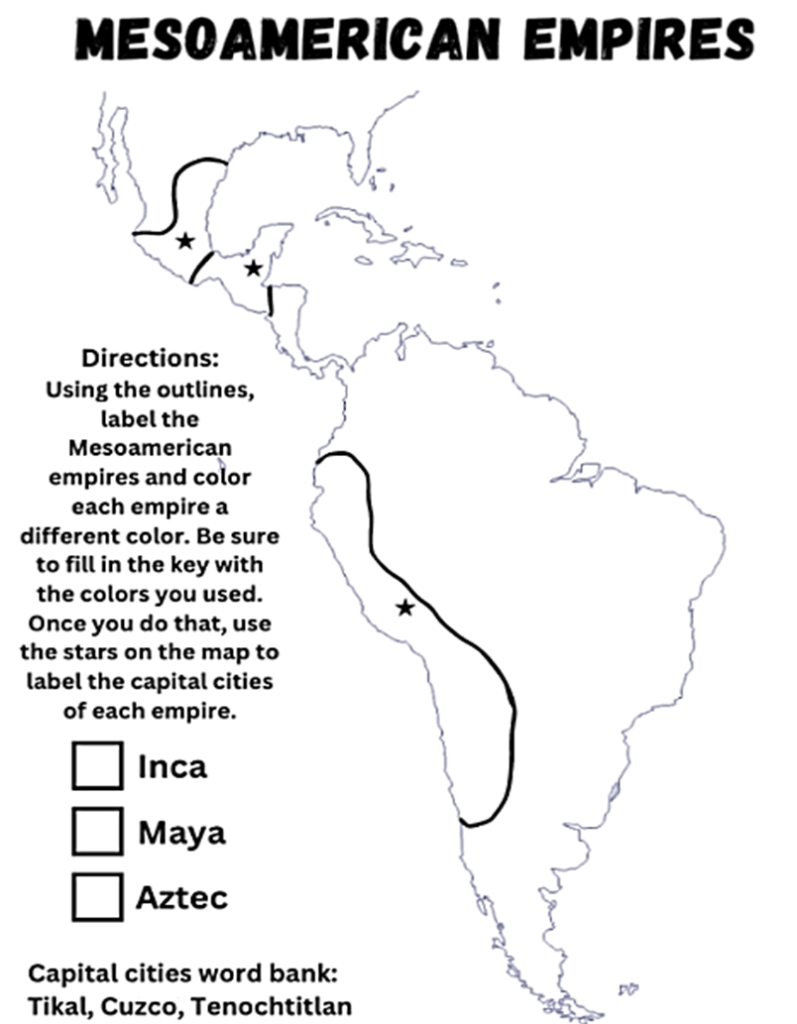
The Civilizations of America: Olmec, Maya, Aztec, Inca
Fill in the gaps with the correct word.
1.Civilisations of America – introduction
While ________________ civilisations were developing in the Mediterranean and Asia advanced societies, first civilisations in ___________________ were developing in the isolation.
The first American civilisation were people known as the __________________ in an area known as ___________________. They are often called the „mother culture” because they influenced other Mesoamerican societies. The Olmecs built ____________________ to honor their leaders and gods. Olmecs knew _______________, _______________________, the basics of _______________________ and the number zero. They spread their ___________________ to other Mesoamericans. For unknown reasons, the Olmec civilization _____________________ by 400 B.C.
2. Mayan, Aztec and Incan Empires
A. MAYANS
Mayans were ____________________ into individual ___________________________ ruled by kings. The Mayan economy was based on _____________________ (they cultivated corn, beans and broad beans). Mayan society was highly organized. At the top was the king who had _____________________ power. He held both _________________ and _____________ authority. Below him were nobles, priests, and warriors, who played important roles in governing, conducting rituals, and protecting the cities. Skilled artisans and merchants formed the middle class, producinggoods and trading with other regions. The _________________ made up the largest social class. Mayans were polytheistic and offered their blood, food and sometimes ______________ sacrifices to please the gods. They invented a _____________________ based on pictures, an accurate 365-days __________________ and advanced temples. The Mayans declined perhaps due to warfare among Mayan city-states, overfarming and Spanish invasion.
B. AZTECS
After the decline of the Mayans, the ________________ were developing in present-day ________________ . They built their main city ___________________________ in 1325 and formed a massive ________________ controled it through 38 __________________________ and received tribute from conquered peoples. They based on farming and trading. They did not know the ___________________. Aztecs society was ________________________ (kings, nobility, merchants, artisans, slaves). Aztecs worshipped many goods, especially the ____________ and made thousands of human _________________ each year. Like the Mayans, the Aztecs developed an accurate _____________________, they built ________________ complexes and ______________ on top of pyramids. When the ______________________ arrived in America, their civilization was already in ________________. A century of brutal rule over the provinces and milions of human sacrifices led to revolts. But, the true demise of the Aztecs came when the __________________ discovered America and conquered this civilization.
C.INCAS
1.While the Aztecs ruled Mexico, the ______________________ began to dominate the area of the Andes Mountains of___South________America. Many Incan cities like ____________________ and ___________________ were built in the ____________________ . Like the Aztecs, the Incas built a vast ________________ which included 80 provinces. But, the Incas ruled with tolerance and __________________ their empire with roads, ____________________ and communication (smoke signals). Inca innovations included _____________, a means of record keeping involving ____________. Like other Mesoamerican civilizations, the Aztecs were conquered by the Spanish conquistadors.
Based on sources and information below follow the questions. Make conclusions and present it to your class. Pay special attention to the similarities and differences in the history of Poland and Hungary.
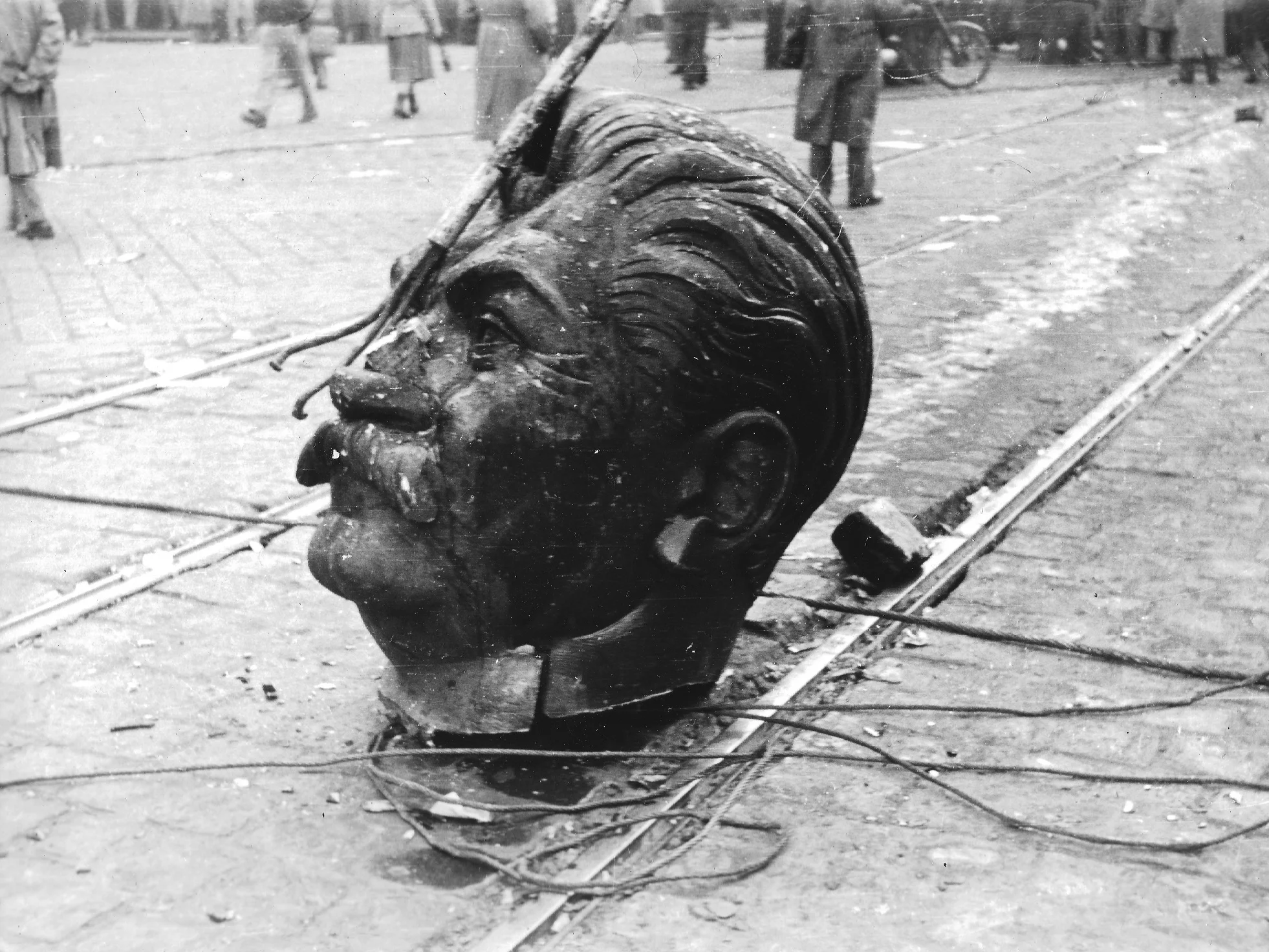
2. Look at the photo and try to describe the public mood in the capital of Hungary. Were the moods in Poland similar at that time?
3. Read the article: https://polin.pl/en/march-68
Why were Jews blamed for the protests in Poland in 1968? Did a similar situation happen in Hungary?
4. How did the Round Table help build democracy in Poland and Hungary?

5. Look at the maps. Make conclusion.


Źródło: https://www.researchgate.net
Based on sources and information below follow the questions. Make conclusions and present it to your class. Pay special attention to the similarities and differences in the history of Poland and Hungary.
Secret Additional Protocol. (Moscow, August 23, 1939)
„Article II. In the event of a territorial and political rearrangement of the areas belonging to the Polish state, the spheres of influence of Germany and the U.S.S.R. shall be bounded approximately by the line of the rivers Narev, Vistula and San.
The question of whether the interests of both parties make desirable the maintenance of an independent Polish States and how such a state should be bounded can only be definitely determined in the course of further political developments.
In any event both Governments will resolve this question by means of a friendly agreement.”
2. Read the article. Describe what attitude the Hungarian state had toward the German and Soviet occupations in Poland.
3. Were Poland and Hungary on the same side of the conflict?
4. Who was Miklós Horthy de Nagybánya?
5. Who were Henryk Sławik and József Antall? What did they do together? What are the monuments below a symbol of?


Based on sources and information below follow the questions. Make conclusions and present it to your class. Pay special attention to the similarities and differences in the history of Poland and Hungary.

2. Read the article: https://dailynewshungary.com/explaining-treaty-of-trianon-non-hungarians/
3. Read a report from a Polish newspaper about the Hungarian reaction to the Treaty of Trianon. Check if the Hungarians made any moves to get their lost territories back.
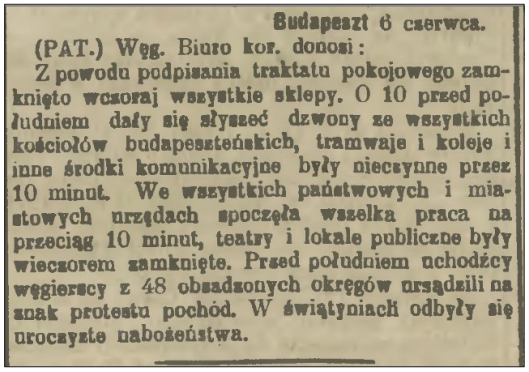
Translation:
„Budapest, June 6
(PAT.) According to the Hungarian correspondent’s office:
Due to the signing of the peace treaty, all shops were closed yesterday. At 10 a.m., the bells of all Budapest churches could be heard ringing. Trams, railways, and other means of transportation were suspended for 10 minutes. In all state and municipal offices, all work stopped for 10 minutes, and theaters and public venues were closed in the evening. Before noon, Hungarian refugees from 48 occupied districts held a protest march. Solemn services were held in the temples.„
4. Read the text below. Describe the time and circumstances in which Poland regained its independence.
„Political conditions after World War I allowed Poland to regain its independence on November 11, 1918. Poland was divided between three powers for 123 years. This caused many political, economic, and social problems. It was necessary to unite the country again. One of the most important problems of the reviving state was the struggle to define its territory. The Treaty of Versailles set the border with Germany in the west, but it completely ignored the issue of the eastern border. At the beginning, the Polish state was limited to the western part of the Russian and Austrian partitions. The fight for borders, which lasted several years, began. A successful uprising against Germany broke out in Wielkopolska. As a result of three uprisings and a plebiscite in Upper Silesia, Poland gained the third part of this country. The reborn Polish Army undertook fight in the east, firstly with Ukrainians for Lviv, then with Soviet Russia that posed a threat to the existence of the Republic of Poland. The Polish victory in the Battle of Warsaw (the so‑called Miracle at the Vistula) in August 1920 turned out to be of a key meaning. It was not possible to rebuild the Republic of Poland within the borders from before partitions, but the reborn Polish state included lands from all three partitions, including with access to the sea. The main cities were Warsaw, Cracow, Poznań, Lviv and Vilnius.”
5. What was the situation of national minorities in both countries?
An extended-level (matura-level) history lesson in a bilingual class/ review lesson.

The proverbial saying about the traditional brotherhood and camaraderie between Poles and Hungarians.
The saying’s Polish text reads
Polak, Węgier — dwa bratanki,
i do szabli, i do szklanki,
oba zuchy, oba żwawi,
niech im Pan Bóg błogosławi.
The full, two-couplet Hungarian version reads
Lengyel, magyar – két jó barát,
Együtt harcol s issza borát,
Vitéz s bátor mindkettője,
Áldás szálljon mindkettőre.
Translation:
Pole and Hungarian — two brothers/fellow,
good for fight and for hit the booze 🙂
Both courageous, both lively,
God bless them both!
MAIN GOALS: Exploring the common history of Poland and Hungary in the 20th century.
The fates of Poles and Hungarians have been closely linked over the centuries. Because our countries are located close, we faced similar problems. Poland–Hungary relations are related by close friendship, brotherhood and camaraderie rooted in a deep history of shared rulers, cultures, struggles, and faith.
BRAINSTORMING
What are the historical relations between Poland and Hungary? How has the historical relationship between Hungary and Poland evolved, (especially in the context of current geopolitical tensions)? (generally, different periods of time)
How the history of Hungary was evolved in 20th Century? Follow the film and materials below. Try to find similarities and differences in the history of Poland and Hungary.
INTRODUCTION (please, turn on subtitles)
Hungary
Poland
WORKING GROUPS:
| GROUP 1 Post–World War I Period | GROUP 2 Poland and Hungary during World War II | GROUP 3 After World War II |
 |  |  |
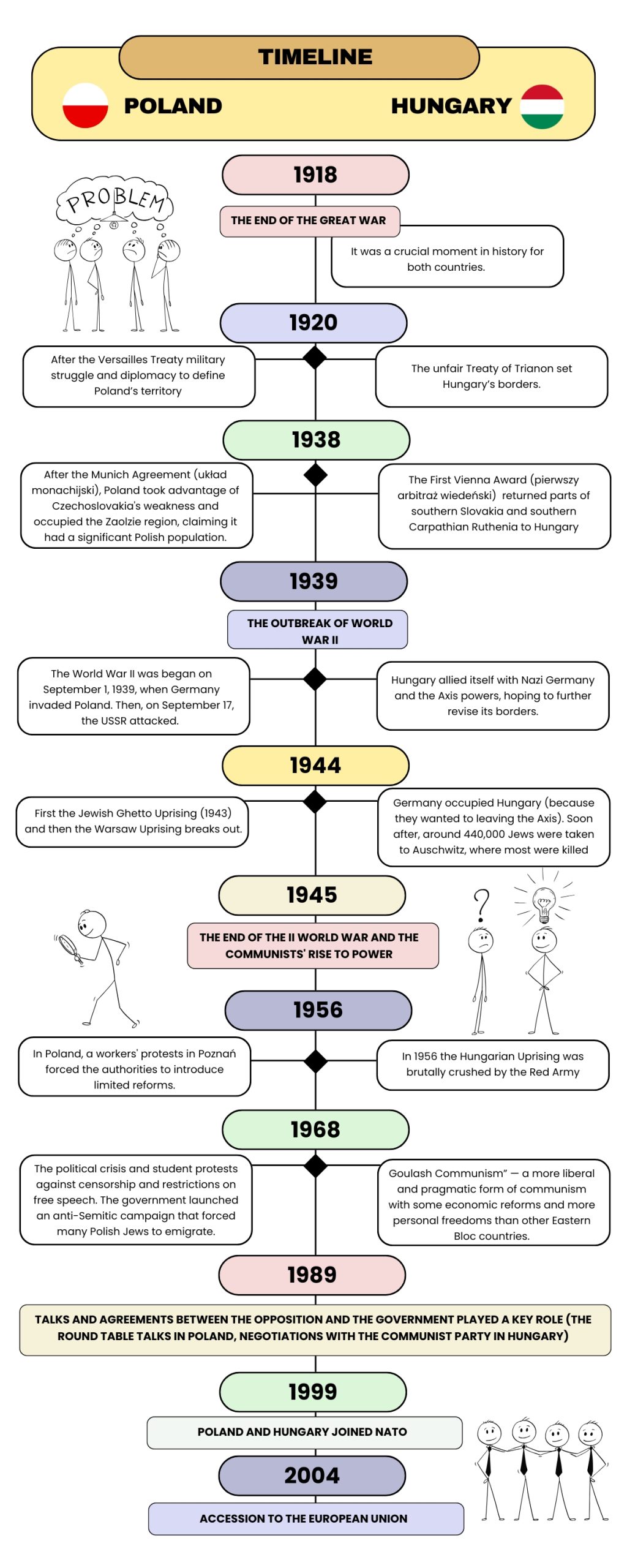
SUMMARY OF POLISH AND HUNGARIAN HISTORY IN 20TH CENTURY
HOMEWORK
Do you agree with the statement that the Polish youth protests in March 1968 had the same ideological background as the uprisings in Hungary in the same year? Write an essay on the following topic. Include political, economic, and social aspects. Your essay should contain at least 250 words.
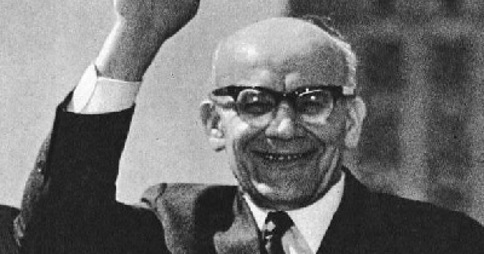
*nazwa okresu rządów Władysława Gomułki po 1956 r., wymyślona przez
Tadeusza Różewicza.
CEL: Dowiedzieć się, czym była odwilż i jaką rolę odegrała w powojennej historii Polski.
W jakich okolicznościach Gomułka uzyskał stanowisko I sekretarza KC PZPR?
-Poznański Czerwiec – 1956 r.
Rządy Gomułki – streszczenie
chwilowa liberalizacja polityki – odejście od stalinowskich form kontroli społeczeństwa:
-zmniejszono indoktrynację społeczeństwa,
-zniknął strach przed bezpodstawnymi aresztowaniami,
w dalszym ciągu duże uzależnienie od Moskwy, ale ZSRR nie wysyła już do Polski ludzi obejmujących stanowiska kierownicze w aparacie państwowym i wojskowym – tu dowolność pozostawiona PZPR (nad wojskiem czuwa Układ Warszawski)
życie codzienne ulega stabilizacji, ale jakość życia rośnie powoli:
-poprawa zaopatrzenia sklepów (zmniejszają się kolejki, zamknięto sklepy „za żółtymi firankami” zastępując je innymi sklepami dla nomenklatury w budynkach partyjnych i milicji)
-starano się rozwijać przemysł spożywczy i towarów konsumpcyjnych (pojawia się więcej artykułów gospodarstwa domowego (pralki, lodówki, meble, radia a później telewizory)
-budownictwo mieszkaniowe
-opieka społeczna (żłobki, przedszkola, szansa podjęcia studiów dla zdolnej młodzieży)
trwało to krótko bo w latach 60. nie poprawiły się warunki bytowe obywateli, rosła dysproporcja standardu życia w stosunku do krajów Europy Zachodniej a nawet Czechosłowacji, Węgier czy NRD:
-wrócono do pięciolatek i nacisku na przemysł ciężki
-powstała petrochemia Płock,
-otwarto kopalnie miedzi w Lubinie i Polkowicach,
-powstały kopalnie węgla brunatnego w Zagłębiu Turoszowskim i Konioskim,
-powstawały liczne elektrownie
-Polska inwestowała w przemysł zbrojeniowy.
W końcu lat 60. starano się nadrobić zapóźnienie:
-zakupiono licencję na produkcję samochodu Fiat 125p z Włoch.
-plany budowy bloków z „wielkiej płyty” (budowy ruszą dopiero w latach 70.)
Rozwój polskiej kultury:
-filmy Andrzeja Wajdy (Popiół i diament), Andrzeja Munka (Zezowate szczęście) i Romana Polańskiego (nominacja do Oskara – Nóż w wodzie) zdobyły uznanie na świecie i weszły do kanonu światowego kina. Aleksander Ford – ekranizacja Krzyżaków Sienkiewicza.
-rozwój polskich środowisk opiniotwórczych zgromadzonych wokół tygodnika „Polityka”,
-muzyka jazzowa, rozrywkowa (Czerwone Gitary, Skaldowie – Festiwal Polskiej Piosenki w Opolu)
Konflikt władz z Kościołem katolickim
-początkowo stosunki z kościołem poprawne (zwiększono liczbę zezwoleń na budowę kościołów, organizowano pielgrzymki, Kościół zachęcił obywateli do udziału w wyborach parlamentarnych w 1957 r.)
zaostrzenie walki z Kościołem na początku lat 60-ych:
-zniesiono dni wolne od pracy: 6 stycznia (święto Trzech Króli) i 15 sierpnia (święto Wniebowstąpienia Najświętszej Marii Panny),
-usunięto naukę religii ze szkół, zdejmowano krzyże w szkołach
-oficerom wojska i milicji zabroniono udziału w nabożeństwach, zawierać ślubów kościelnych, chrzcić dzieci,
okres rywalizacji władz państwowych i kościelnych o organizację obchodów 1000–lecia państwa polskiego i Milenium Chrztu Polski (obchodów milenijnych) Tysiąclecie kontra Milenium.
CZAR PRL MILENIUM: https://www.youtube.com/watch?v=vYftgRAnY00
-szczytowy moment konfliktu między władzami kościelnymi a państwowymi o obchody Milenium Chrztu Polski, którym był list biskupów polskich do niemieckich (1965) -polscy biskupi użyli sformułowania „wybaczamy i prosimy o wybaczenie”. (chodziło o pojednanie polsko-niemieckie, duszpasterzy oskarżono o zdradę narodu polskiego i szarganie pamięci o ofiarach II wś)
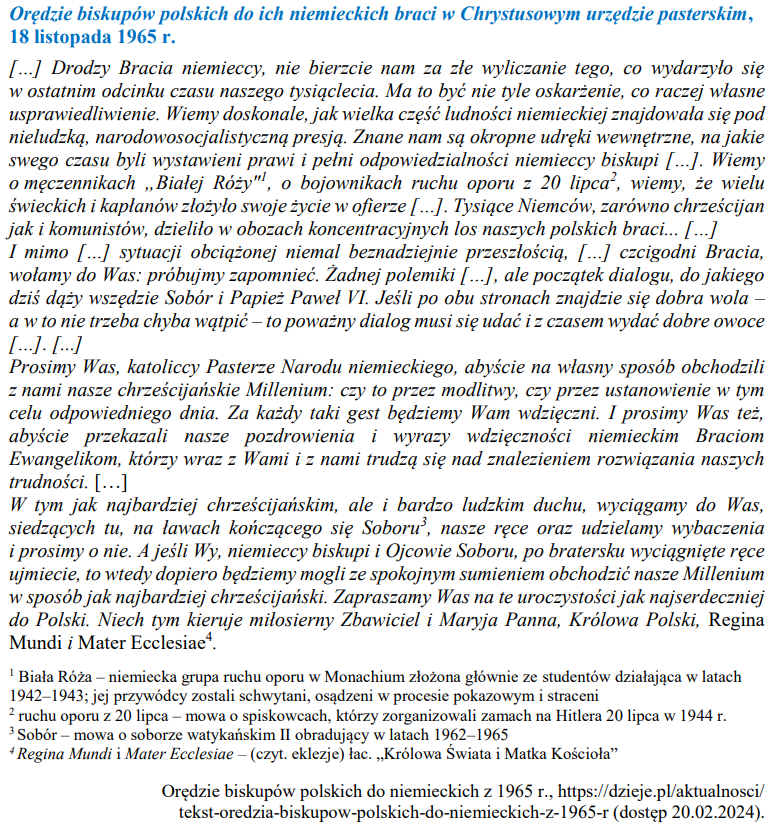
Dlaczego list biskupów polskich wywołał tak ostrą reakcję władz komunistycznych?
-odciągano uwagę od obchodów religijnych (rozpoczęto budowę 1000 szkół na tysiąclecie, organizowano wiece i imprezy sportowe w miejscach, w których odbywały się uroczystości kościelne)
Kulminacja obchodów Millenium Chrztu Polski na Jasnej Górze 3 maja 1966 r – w rocznicę zlikwidowanego przez komunistów święta narodowego.
– władze nie zezwoliły papieżowi Pawłowi VI na udział w obchodach tysiąclecia chrztu Polski,
-w mediach o tym nie mówiono.
Władze świętowały Tysiąclecie Państwa Polskiego – 22 lipca 1966 (Manifest PKWN–>Polska Lubelska)
W końcu lat 60. narastające niezadowolenie społeczne z rządów Gomułki:
-bunt studentów z marca 1968 r.,
-List 34 – w 1964 r. 34 polskich intelektualistów podpisało się pod pismem skierowanym do władz, w którym skrytykowali politykę kulturalną paostwa. Pod pismem podpisał się m.in. poeta Adam Słonimski i Jan Józef Lipski (publicysta, krytyk i historyk literatury). Wobec sygnatariuszy listu
zastosowano represje.
-nagonka antysemicka w 1968 r. (w 1967 r. Izrael wygrał wojnę sześciodniową z pastwami arabskimi, wspieranymi przez ZSRR (zerwał stosunki dyplomatyczne z Izraelem i rozpoczęła się nagonka na Żydów i nasiliły się nastroje antysemickie)
-Władysław Gomułka w swoim wystąpieniu zasugerował wrogie postawy wobec ludności pochodzenia żydowskiego, przeprowadzano czystki antysemickie w partii, w wojsku, w instytucjach naukowych i władzach.
w styczniu 1968 r. władze nakazały zdjąć z afisza spektakl „Dziady” Adama Mickiewicza, grany w Teatrze Narodowym w Warszawie, w reżyserii Kazimierza Dejmka, ze względu na jego antyrosyjski charakter. Wywołało to protesty:
Pozycja Gomułki zacznie słabnąć – zarówno w partii, jak i w społeczeństwie.
POLITYKA ZAGRANICZNA – normalizacja stosunków z sąsiadami:
a) 1956 r. porozumienie z ZSRR
b) normalizacja stosunków z sąsiadami – Czechosłowacją i NRD,
c) rozwijanie stosunków z innymi krajami komunistycznymi ; pogorszenie stosunków z Jugosławią i Chinami, ze względu na ich spór z ZSRR,
d) polepszenie stosunków z krajami Europy Zachodniej – ułatwienie eksportu towarów i zaciąganie kredytów
f) 1957 r. plan Adama Rapackiego – plan wprowadzenia strefy bezatomowej w Europie, przedstawiony na sesji Zgromadzenia Ogólnego ONZ. Plan odrzucony ze względu na Układ Warszawski.
g) 1970 r. układ z RFN w Warszawie – był on wynikiem dążeń do normalizacji stosunków ze strony polskiej jak i efektem tzw. „polityki wschodniej” (Ostpolitik) Willy`ego Brandta. Uznano polsko – niemiecką granicę na Odrze i Nysie Łużyckiej.
Wydarzenia grudnia ’70
1. Wzrost cen żywności w okresie przedświątecznym.
2. Strajk w Stoczni Gdańskiej (14 grudnia) – interwencje milicji nie pomagają. Strajk się rozszerza, np. demonstracje uliczne w Gdańsku i Szczecinie, podpalenie gmachu Komitetu Wojewódzkiego PZPR w Gdańsku, domagają się dymisji Gomułki i Cyrankiewicza.
3. „Czarny czwartek” w Gdańsku – 17 XII 1970 r.
a. władze wprowadziły w Gdańsku stan wyjątkowy
b. wicepremier Stanisław Kociołek wezwał stoczniowców do powrotu do pracy
c. wojsko otworzyło ogień do robotników idących spokojnie do pracy – 17 XII 1970 r. (zginęło 18 osób, według oficjalnych danych łącznie na Wybrzeżu zginęły 43 osoby, a 1165 odniosło rany)
Zbigniew Godlewski https://www.facebook.com/watch/?v=3408835132570990
5. Zmiany na najwyższych szczeblach władzy:
a. dymisja Władysława Gomułki
b. nowym I sekretarzem KC PZPR został Edward Gierek
c. nowym premierem rządu został Piotr Jaroszewicz
PRACA DOMOWA
Znajdź informacje o skutkach emigracji z marca 1968 r. Przygotuj notatkę na ten temat.